


Physikalische Grundlagen der Nuklearmedizin/ Entfaltung
Einleitung[Bearbeiten]
In der Nuklearmedizin versteht man unter einem Renogramm die Messung der Radioaktivität in der Niere, nach Injektion eines Radiotracers in die Außenvene. Die Ankunft des Tracers in der der Niere ist zeitlich verschmiert, und die unmittelbare Reaktion kann nicht direkt gemessen werden. Die Entfaltungsanalyse ist, wie wir unten sehen werden, eine Methode um die Antwortfunktion aus dem Renogramm zu bestimmen. So dass die Stoffwechselfunktion beider Nieren eines Patienten oder der Nieren zweier unterschiedlicher Patienten zuverlässig verglichen werden können.
Der Tracer enthält ein radioaktives Isotop, daher nimmt seine Aktivität zeitlich ab. Dieser Effekt überlagert sich mit der zeitlich veränderlichen Verteilung des Tracers im Körper. In diesem Kapitel lassen wir jedoch Effekte durch die zeitliche Veränderung der Radioaktivität des im Tracer enthaltenen Radioisotops außer Acht. Dieses Vorgehen ist berechtigt solange wir Untersuchungen durchführen deren Dauer erheblich kürzer ist als die Halbwertszeit des verwendeten Radioisotops. Bei einem Faktor 15 (entsprechend einer Untersuchungsdauer von 25 Minuten bei 99mTc) beträgt der Fehler etwa 5%.
Renographie[Bearbeiten]
In der Renographie, zeigen hintergrundkorrigierte Kurven an wie sich die Menge eines Tracers in jeder Niere mit der Zeit verändert. Weiterhin hängt die Form jeder der beiden Kurven von der Rate ab, mit der der Tracer:
- über das renale arterielle System in die Nieren eintritt.
- die Nieren über den Harnleiter verlässt.
Die Rate mit der der Tracer in die Nieren eintritt wird Eingangsrate genannt und hängt ab von

- der Plasmakonzentration der Tracers in der renalen Arterie
- der Rate mit der der Tracer aus dem Plasma durch die Nieren extrahiert wird.

In Falle eines Tracers der schnell durch die Nieren extrahiert wird (wie z.B. OIH, MAG3) hängt die Extraktionsrate vom effektiven renalen Plasma-Fluss () ab, so dass:


Im Falle eines Tracers der durch Filterung durch die Glomeruli[1] extrahiert wird (z.B. DTPA) hängt die Rate der Extraktion von der glomerulären Filterungsrate ab (), so dass:


Der Verlauf der Plasmakonzentration enthält zu Anfang ein ausgeprägtes Maximum, dessen Amplitude und Dauer abhängt von:
- der Injektionsgeschwindigkeit
- der Körperstelle an der die Injektion durchgeführt wurde
- der Mischungsrate zwischen Tracer und Blut.
Nach diesem anfänglichen Maximum nimmt die Plasmakonzentration biexponentiell mit der Zeit ab. Dieser Abfall ist abhängig von:
- Der Austauschrate mit extravaskulären Regionen
- Dem Uptake[2] des Tracers durch die Niere
Die Plasmakonzentration , ist dementsprechend abhängig von Faktoren die in keiner direkten Beziehung zur Nierenfunktion stehen. Es ist somit schwer, falls nicht sogar unmöglich, die Renogramme verschiedener Patienten oder des selben Patienten zu unterschiedlichen Zeiten zu vergleichen.
- ↑ Ein Glomerulus ist Teil eines Nierenkörperchens. Ein Nierenkörperchen ist Teil eines Nephrons. Eine Niere besitzt ca. eine Million Nephronen. Das Nierenkörperchen filtert Primärharn aus dem Blut.
- ↑ Der Begriff Uptake wurde unverändert ins Deutsche übernommen. Er bezeichnet Aufnahme eines Stoffes in einem Organ.
Ein ideales Renogramm[Bearbeiten]
Ein ideales Renogramm würde man erhalten wenn man den Tracer direkt in die Niere injizieren könnte. Idealerweise sollte eine solche Injektion zu einer Eingangsrate führen die durch eine Deltafunktion beschrieben werden kann. Eine solche würde man als Impulseingangsfunktion bezeichnen.
Das sich ergebende ideale Renogramm wird als Impulsantwort der Niere bezeichnet.

In der Praxis, misst man jedoch die Antwortfunktion der Niere für eine nicht ideale Eingangsrate. Diese reale Antwortfunktion , kann man sich als eine Faltung der tatsächlichen Eingangsrate mit der Impulsantwortfunktion der Niere vorstellen:


Der Prozess der Bestimmung von aus der Messung von und wird als Entfaltung bezeichnet. Anders ausgedrückt erlaubt die Entfaltung von Renogramm-Kurven die Antwortfunktion der Niere auf für eine ideale Injektion zu bestimmen. Als Ergebnis daraus kann man genauere Vergleiche von mehreren Untersuchungen eines Patienten oder zwischen unterschiedlichen Patienten anstellen. Zumindest in der Theorie!
Faltung[Bearbeiten]
Bevor wir uns mit dem Thema Entfaltung beschäftigen, werden wir zunächst den Faltungsprozess behandeln.
Man betrachte das in der folgenden Abbildung dargestellte grob vereinfachte Modell einer Niere. Das Modell nimmt an, dass die Niere aus vier Durchgangswegen besteht, durch die der Tracer in gleicher Weise fließt. Nehmen wir an der Tracer brauche 3 Minuten um den kürzesten Weg zu passieren und 6 Minuten für den längsten, sowie 4 und 5 Minuten für die verbleibenden beiden Wege.

Gibt man eine Deltafunktion auf den Eingang des Modells, so wird die Antwort des Systems durch die Impulsantwortfunktion gegeben sein, wie dies in der obigen Abbildung dargestellt ist. Die Form der Impulsantwortfunktion kann man verstehen indem man die zeitliche Bewegung des Tracers durch das Modell betrachtet:


- Die Impulsantwortfunktion, , wird in den ersten drei Minuten nach der Injektion gleich eins sein, da die Ausgangsmenge des Tracers während dieser Zeit vollständig im Sichtfeld der Gamma Kamera verbleibt.
- In der vierten Minute wird die Menge des Tracers sich um 25% verringert haben. Denn der Anteil, der den kürzesten Weg genommen hat, wird das Sichtfeld der Kamera verlassen haben. Somit wird auf 0,75 abgenommen haben.
- Ähnlich wird in der fünften Minute auf 0,5 abfallen.
- Und schließlich auf 0.25 in der sechsten Minute und auf 0 in der siebenten Minute.
Der wichtige Punkt, den wir uns hier merken sollten ist, dass die Art und Weise wie die Antwortfunktion abfällt, Informationen über die Durchgangszeit der Wege enthält. Man kann das Abfallen der Antwortfunktion durch eine mittlere und eine maximale Durchgangszeit charakterisieren.
Man beachte das man dieses einfache Modell durch Hinzunahme weiterer Durchgangswege erweitert werden kann und dann auch Durchgangszeiten beschreibt, die realen Nieren sehr ähnlich sind. Man beachte weiterhin das diese Modellierungsverfahren einzeln auf das renale Parenchym[1], sowie auf das Nierenbecken[2] oder auf die Niere als ganzes angewandt werden können.
Leider ist es jedoch in der Praxis quasi unmöglich ideale Eingangsimpulse zu erzeugen. Eine Ausnahme bildet vielleicht der Fall einer Bolusinjektion[3] in die renale Arterie. Nichtsdestoweniger kann man den oben vorgestellten Gedankengang so abwandeln, dass er die Effekte bei einer nicht idealen Injektion entsprechend berücksichtigt.

Hier haben wir keinen idealen Eingangsimpuls (manchmal Bolus genannt) auf unser extrem vereinfachtes Modell der Niere gegeben. Wir haben vielmehr eine zeitlich ausgedehnte Eingangsfunktion verwendet in der die eingehende Tracermenge exponentiell abfällt. Wenn wir nun annehmen , dass die Antwort der Niere auf die Folge der Eingangsimpulse sich als Summe der Antworten der Einzelimpulse ergibt, so kann man die Gesamtantwortfunktion wie folgt berechnen.
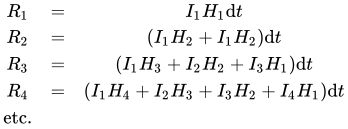
wobei das Zeitintervall ist welches für die Messung der Menge des Tracers verwendet wird.

Daher gilt im allgemein:

wobei

Gehen wir nun von der oben vorgestellten diskreten Formulierung auf die kontinuierliche Schreibweise über, so erhalten wir eine Funktion die Faltungsintegral genannt wird.
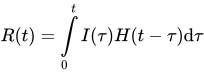
welches man üblicherweise folgendermaßen aufschreibt:
Anders ausgedrückt kann man die reale Renogrammkurve als Ergebnis der Faltung der idealen Renogrammkurve mit der realen Eingangsfunktion begreifen.
Das gerade beschriebene Modell ist ein Beispiel für ein sogenanntes lineares System also ein System bei dem die Antwort auf eine Folge von Eingangsimpulsen sich als Summe der Antworten auf die einzelnen Impulse ergibt. Bei einem solchen System wird weiterhin angenommen, dass der Fluss des Tracers durch das System über die Messzeit konstant ist, es sich also um ein stationäres System handelt.
Anders ausgedrückt wird, für die Renographie, angenommen, dass die renale Clearance[4] und der Urinfluss über die Dauer der Untersuchung konstant sind.
Die renale Clearance nach der Injektion kann, nach der Anfangsphase des Renogramms, als zeitlich konstant angesehen werden, da die verwendete Tracermenge (sei es nun O123IH, 99mTc-MAG3 oder 99mTc-DTPA) so klein ist, dass sie die Funktion der Niere nicht beeinflusst. Das selbe trifft auf die den Urinfluss zu, jedoch tritt die Ausscheidung aus dem Nierenbecken häufig schubweise auf und nicht als kontinuierlicher Fluss. Dieses Fehlen eines stationären Zustandes führt zu großen Problemen bei der Anwendung von Entfaltungsverfahren.
- ↑ renal: die Niere betreffend. Parenchym: Grundgewebe welches eine bestimmte Funktion ausübt. renales Parenchym: Gewebe in der Niere welches die Funktion der Reinigung des Blutes ausübt
- ↑ trichterförmiges oberes Ende des Harnleiters
- ↑ einmalige Injektion einer hohen Dosis
- ↑ das Volumen an Plasma das die Nieren pro Zeiteinheit vom Tracer befreien können
Entfaltung[Bearbeiten]
Die Entfaltung ist ein mathematisches Verfahren das verwendet wird um aus Messungen von und bestimmen. Man verwendet in der Renographie unter anderem folgende Entfaltungstechniken:

- Matrix Inversion - wobei das Faltungsintegral in Form einer Matrix ausgedrückt wird als:

- Wobei für die Matrixmultiplikation steht. Die lässt sich auflösen zu:

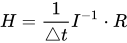
- wobei die inverse Matrix der Matrix bezeichnet.

- Fourier Transformation - wobei die Fouriertransformierte () des Faltungsintegrals berechnet wird. Also:


- kann bestimmt werden aus:
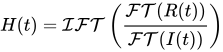
d.h. indem man die Fouriertransformierte von durch die Fouriertransformierte von , teilt und die inverse Fouriertransformation () des Ergebnisses berechnet.

Diese beiden Techniken sind sehr anfällig gegen statistische Fluktuationen der gemessenen Daten und der gemessenen Verläufe von und . Daher werden sie üblicherweise geglättet bevor die Fouriertransformation auf sie angewandt wird.
In der Klinischen Praxis verwendet man ein hintergrundkorrigiertes Renogramm als R(t), und wählt eine vaskuläre Region[1] (ROI[2]), z.B. das Hertz, in dem man misst. Die Impulsantwortfunktion erhält man entsprechend durch Entfaltung. Sie hat ungefähr die in der folgenden Abbildung gezeigt Form.

ist die Impulsantwort zur Zeit und man kann zeigen, dass sie gleich der Nieren Uptake Konstante ist. Man misst verschiedene Zeiten für den Durchgang des Tracers durch die Nieren, wie z.B. die minimale die mittlere oder die maximale Durchgangszeit. Man kann auch ein Durchgangszeitspektrum angeben indem man differenziert.


Schließlich bleibt zu bemerken dass ein hintergrundkorrigiertes Renogramm nicht strikt notwendig ist um eine Entfaltung durchzuführen und man somit auch das gemessene Renogramm unmittelbar verwenden kann. Der Grund hierfür wird klar sobald man sich vergegenwärtigt, dass die Gesamtantwortfunktion, welche sich aus den gemessenen Rohdaten ergibt, die Summe der Nierenantwortfunktion und der Gewebeantwortfunktion darstellt wie die folgende Abbildung zeigt.

Die Durchgangszeiten der Niere können auch noch aus der kombinierten Antwortfunktion ermittelt werden. Weiterhin erkennt man, dass die Uptake Konstante durch Extrapolation der Daten bestimmt werden kann.